
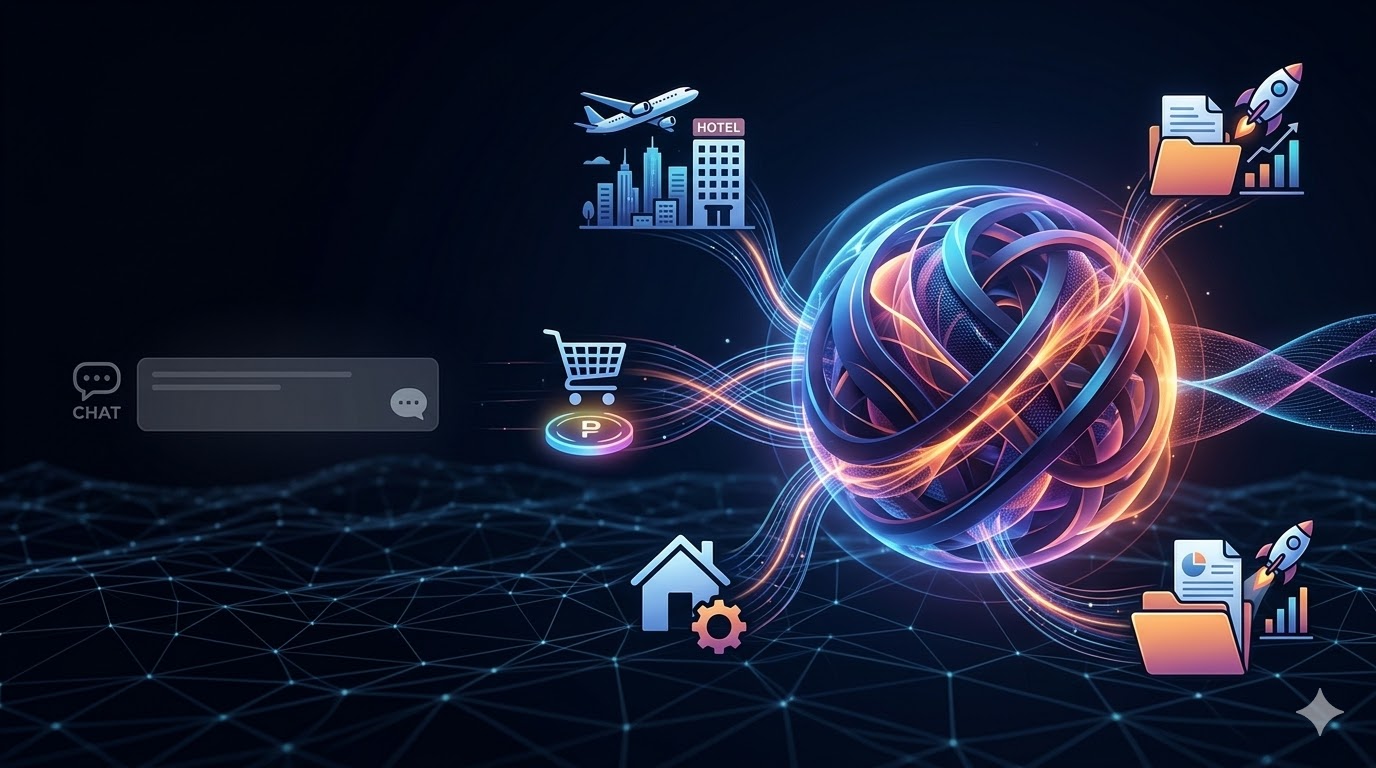
For the past few years, we have been living in the era of the chatbot. We typed questions into a box, and a smart AI typed answers back. It was impressive, but it had a massive limitation: it could only talk. If you wanted to actually get something done, you still had to do the heavy lifting yourself.
In 2026, that era is officially ending. Welcome to the age of Agentic AI.
Instead of just answering your questions, Agentic AI acts on your behalf. It is the difference between a smart encyclopedia and a highly capable personal assistant. Here is a simple, detailed breakdown of what Agentic AI is, how it works, and why it is the biggest technological leap of the decade.
1. Chatbots vs. AI Agents: What is the Difference?
To understand Agentic AI, it helps to look at a real-world scenario. Let’s say you are planning a weekend trip.
The Chatbot Experience: You ask, "Plan a 3-day itinerary for a trip to Rome." The AI gives you a beautiful text list of places to visit and hotels to stay at. But then, you have to open new tabs, find the flights, book the hotel, buy the museum tickets, and add everything to your calendar.
The Agentic AI Experience: You say, "Book me a weekend trip to Rome under $800, leaving Friday night." The AI Agent understands the goal. It actively browses flight websites, finds the best price, checks hotel availability, uses your saved payment method (with your permission), completes the bookings, and automatically syncs the flight times to your calendar.
A chatbot gives you a recipe; an AI Agent buys the ingredients and preheats the oven.
2. How Does It Work? The "Brain and Hands" Concept
How does a computer program suddenly know how to buy plane tickets or send emails? It comes down to giving the AI two new abilities: Reasoning and Tool Use.
Reasoning (Thinking in Steps): When you give an AI Agent a goal, it doesn't just panic and guess. It creates a step-by-step plan. It says, "First, I need to check flight prices. Second, I need to check hotels. Third, I need to compare the total to the $800 budget."
Tool Use (Digital Hands): AI models are now trained to use the software we use every day. An agent can connect to web browsers, calculators, Excel spreadsheets, email accounts, and thousands of other digital tools.
Self-Correction: This is the real magic. If an AI Agent tries to book a hotel and the website is down, it doesn't just crash and give up. It realizes there is an error, changes its plan, and searches for a different hotel website. It learns from its environment in real-time.
3. Real-World Superpowers: What Can It Do For You?
Agentic AI is moving out of research labs and into our daily lives. Here is how it is changing different areas:
Personal Life: Imagine telling your phone, "Cancel my gym membership." The agent navigates the complicated gym website, interacts with the customer service portal, fills out the cancellation form, and emails you the confirmation receipt.
Work and Productivity: Instead of reading 50 pages of financial reports, you can tell your work Agent, "Read these PDF reports, find the three biggest expenses, put them into a bar chart, and email the presentation to my team." A task that takes a human four hours takes the agent four minutes.
Software and Gaming: In gaming, non-playable characters (NPCs) are no longer repeating the same three lines of dialogue. Powered by Agentic AI, they have their own goals, routines, and memories, creating worlds that feel truly alive.
4. The Big Question: Is It Safe?
Giving AI the ability to click buttons, send emails, and spend money naturally sounds a bit scary. What if it makes a mistake? What if it buys the wrong thing?
The tech industry has solved this with a concept called "Human-in-the-Loop." Right now, AI Agents are not allowed to run completely wild. They act as perfect preparers. If an agent is tasked with paying a bill or sending an important email to your boss, it will do 99% of the work. It will draft the email, attach the files, and write the address. But before it hits "Send" or "Buy," a pop-up appears on your screen asking for your final approval. You are always the final decision-maker.
Frequently Asked Questions (FAQ)
Q: Will Agentic AI take my job? A: This is the most common concern, but scientific studies and industry trends in 2026 point toward "augmentation," not replacement. Agentic AI is designed to take over the boring, repetitive parts of your job—like data entry, scheduling, and sorting emails. This frees you up to focus on the creative, strategic, and human-relationship parts of your work that a machine simply cannot do. It is a powerful assistant, not a replacement.
Q: Do I need to know how to code to use AI Agents? A: Not at all. The beauty of Agentic AI is that it understands natural human language. You do not need to write complex commands or scripts. You simply talk to it or type out your request exactly as you would ask a human assistant (e.g., "Find the cheapest direct flight to London next Friday and hold the ticket for me").
Q: Can an AI Agent secretly access my bank account or spend my money? A: Security is the absolute highest priority for these systems. AI Agents operate within strict boundaries. While they can browse shopping sites or prepare a payment portal, they are blocked from executing financial transactions without a "Human-in-the-Loop." This means the agent will always pause and ask for your biometric approval (like a fingerprint or face scan) before a single dollar is spent.
Q: How is this different from older smart assistants like Siri or Alexa? A: Older voice assistants were essentially voice-activated search engines or remote controls. If you asked them to do something they weren't specifically programmed for, they would just say, "I'm sorry, I don't understand." Agentic AI has reasoning skills. If it faces a new problem, it figures out a multi-step plan to solve it on its own, adapting to errors along the way.
Q: Do I need to buy a supercomputer to run these agents? A: No. While massive agents run on cloud servers, 2026 is seeing a huge push toward "Local AI." Modern laptops and smartphones are now built with Neural Processing Units (NPUs)—special chips designed specifically to run smaller, highly efficient AI agents directly on your device. This means your personal agent can run fast, for free, and without sending your private data to the internet.
The Bottom Line
We are moving from computers that wait for our instructions to computers that actively solve our problems. Agentic AI is turning software from a tool we use into a partner we collaborate with. As these systems get faster, more secure, and integrated into our phones and computers, the way we work and live will never be the same.