

Ubuntu 26.04 LTS, codenamed "Resolute Raccoon," marks a pivotal shift in the Linux ecosystem. It is no longer just a "stable workstation" OS; it is transforming into a modernized, AI-ready, and potentially immutable powerhouse. For power users and sysadmins alike, the 2026 roadmap suggests a version of Ubuntu that finally bridges the gap between traditional Debian stability and the cutting-edge requirements of modern hardware.
For years, Ubuntu has been the "comfort zone" of the Linux world. It’s the distro you install when you just want things to work. However, as we look toward the development cycle of Ubuntu 26.04 LTS, the narrative is shifting. Canonical isn't just maintaining a legacy; they are re-engineering the foundations of the desktop and server experience.
Whether you are a developer, a privacy advocate, or a Linux enthusiast looking for the next big leap, the "Resolute Raccoon" era is shaping up to be the most ambitious LTS release in a decade.
1. The Core Architecture: Linux Kernel 7.0 and Rust Integration
By the time Ubuntu 26.04 hits full maturity, the Linux Kernel 7.0 architecture will likely be the standard. This isn't just a version number jump.
Schedulers & Performance: We expect major improvements in the EEVDF (Earliest Eligible Virtual Deadline First) scheduler, which significantly optimizes task handling for modern multi-core CPUs like the Ryzen 9 and Intel Ultra series.
The Rust Revolution: We are seeing more drivers and core kernel modules being rewritten in Rust. For the end-user, this means a drastic reduction in memory-related crashes and a much more secure "base" for the operating system.
Hardware Parity: With the rise of ARM64 on laptops, 26.04 is expected to offer first-class support for Snapdragon and Apple Silicon-like architectures, making Ubuntu a viable choice for high-end, battery-efficient mobile workstations.
2. GNOME 50: The Next Generation of Desktop Flow
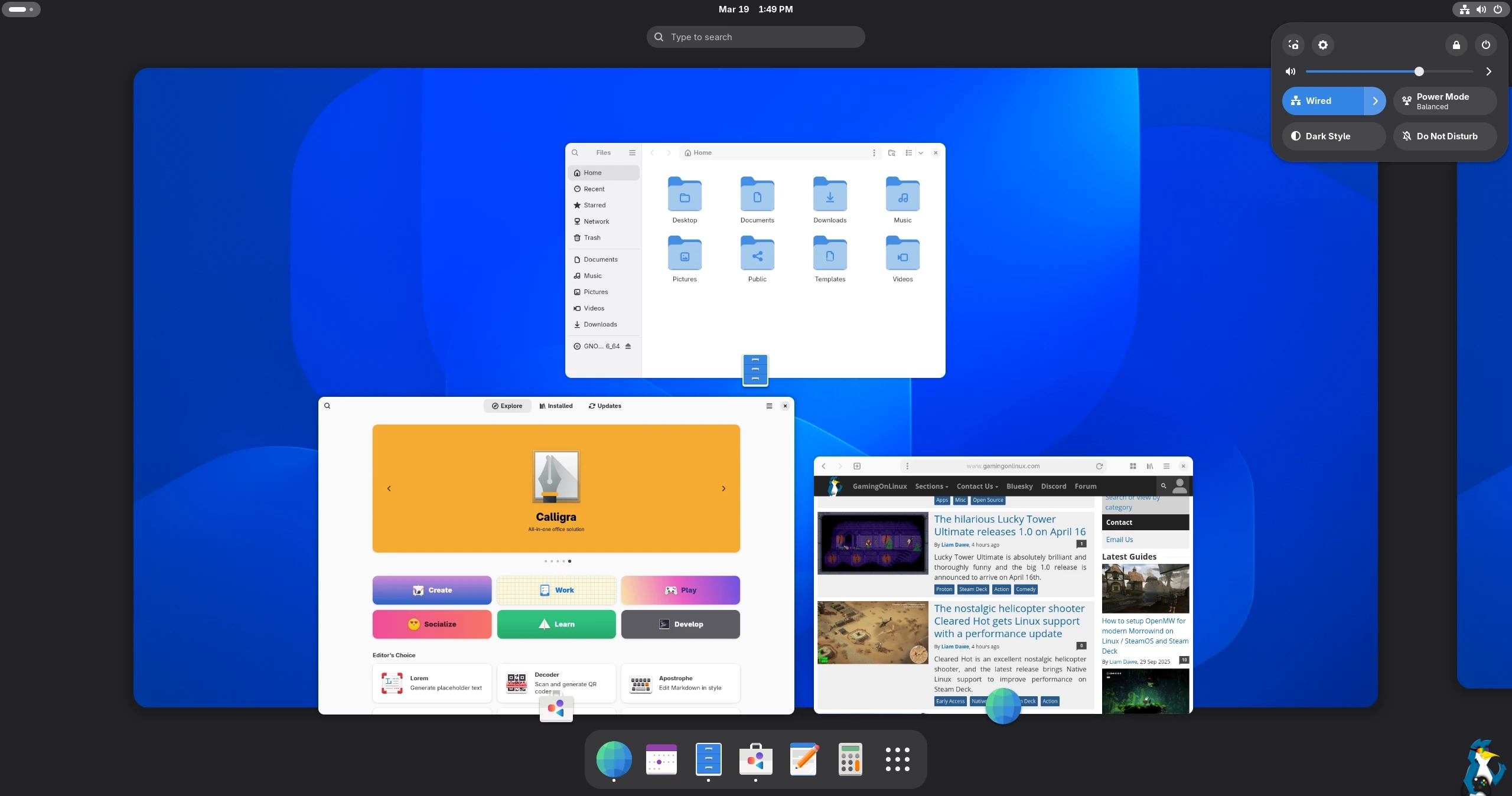
Image sourced from here.
Ubuntu 26.04 is expected to ship with GNOME 50. This milestone is predicted to refine the "Activity" workflow into something far more fluid.
Dynamic Tiling: While we love our window managers like Hyprland, GNOME 50 is expected to bring native, advanced tiling features that mimic some of that "tiler" efficiency without the steep learning curve.
Refined Yaru Aesthetics: The Yaru theme is evolving. Expect a move toward "Organic Glass" aesthetics—subtle transparencies, more rounded corners (but not too sharp), and a high-contrast mode that actually looks modern rather than just "accessible."
Wayland Everywhere: By this cycle, X11 will likely be a legacy ghost. The focus is 100% on Wayland, which means smoother animations, better multi-monitor scaling, and tear-free gaming via the latest PipeWire and Mesa stacks.
3. The "Immutable" Shift: Ubuntu Core Desktop
This is perhaps the biggest talking point for the 2026 cycle. Canonical is pushing toward Ubuntu Core Desktop—an immutable version of Ubuntu.
Transactional Updates: Imagine a system where an update can never "break" your boot. If an update fails, the system simply rolls back to the previous known-good state.
Security by Design: With a read-only root filesystem, malware has nowhere to hide. For developers, this means using Distrobox or LXD containers for development, keeping the host system pristine and stable.
Snap-First, but Refined: The "Snap" debate continues, but by 26.04, the startup times and integration issues are predicted to be a thing of the past. The goal is a unified sandbox where your browser, IDE, and tools are isolated for maximum security.
4. AI at the OS Level: NPU Integration
2026 is the year of the "AI PC," and Ubuntu 26.04 is positioning itself as the open-source answer to Windows Copilot.
Native NPU Support: Ubuntu will likely include a unified driver stack for NPUs (Neural Processing Units). This allows for local AI processing—meaning you can run LLMs (Large Language Models) or image generation locally on your hardware without sending data to a cloud.
AI-Assisted Troubleshooting: Expect a new system tool that uses local machine learning to analyze logs and suggest fixes. Instead of scouring StackOverflow for hours, the OS could potentially tell you exactly which config file is causing your "Resolute Raccoon" to stutter.
5. Gaming and Pro-Graphics
The "Steam Deck effect" has permanently changed Linux gaming. For 26.04, the focus is on "Zero Configuration" gaming.
NVK Maturity: The open-source NVIDIA drivers (NVK) are expected to reach performance parity with the proprietary drivers by this cycle. This means a seamless "out of the box" experience for NVIDIA users, which has historically been the biggest pain point for Linux newcomers.
HDR Support: HDR on Linux is finally becoming a reality. The 26.04 stack is predicted to offer full, stable HDR support for media and gaming, matching the visual fidelity of macOS and Windows.
Frequently Asked Questions (FAQ)
Q: When is the official final release date for Ubuntu 26.04 LTS?
A: The final, stable version of "Resolute Raccoon" is scheduled to launch on April 23, 2026. Following the Ubuntu tradition, LTS versions are released on the fourth Thursday of April every two years.
Q: Will Ubuntu 26.04 drop support for X11 entirely?
A: While X11 packages will likely remain in the universe repositories for legacy reasons, the default experience and official support will be almost exclusively Wayland. Most modern "Linuxers" have already made the switch, and 26.04 will likely solidify this.
Q: Should I wait for 26.04 or stay on 24.04?
A: 24.04 is an incredible "stability" release. However, if you are using the latest hardware (Intel 15th gen or Ryzen 9000 series), the kernel and Mesa improvements in the 26.04 cycle will be worth the upgrade for the performance gains alone.
Q: Is "Immutable Ubuntu" mandatory?
A: No. Canonical plans to offer both the traditional "Classic" Ubuntu and the "Core Desktop" (Immutable) version. You can choose the flexibility of a standard Debian-based system or the rock-solid security of an immutable one.
Q: How long will 26.04 LTS be supported?
A: Following the current trend, 26.04 LTS is expected to have a minimum of 5 years of standard support, extendable to 10 or even 12 years with Ubuntu Pro, making it a "forever OS" for many enterprise users.