Loading article
Explore articles
Latest articles
Complete archive of system logs and shared articles across the grepground network.
Records028

The gaming community and hardware enthusiasts are currently dissecting a massive wave of leaks under the banner: "Next-Gen PlayStation 6 leaks reveal major features coming." The rumors suggest that Sony is not just building a new box with a faster APU, but rather engineering an "imminent generational transition" that redefines how games are distributed, processed, and played.
For developers and system architects, the technical implications of these leaks are far more fascinating than the standard console war debates. The focus is shifting from brute-force rendering (TFLOPS) to intelligent asset management and AI-driven performance. Here is a deep dive into the core pillars of the leaked PlayStation 6 architecture.
The 'PlayGo' Protocol: Intelligent Asset Delivery
The most disruptive feature mentioned in the leaks is PlayGo. Often oversimplified as Sony’s version of Xbox's "Smart Delivery," PlayGo appears to be a much more sophisticated, dynamic data pipeline designed to solve the modern 200GB+ game size crisis.
Dynamic Asset Fetching: Instead of downloading a monolithic game file, PlayGo operates like an intelligent edge-client. When a user purchases a game, the system downloads a core execution binary. High-resolution textures, uncompressed audio, and heavy 3D models are conditionally fetched in the background based on the specific hardware requesting it (e.g., a 4K TV display versus a 1080p handheld screen).
Storage Optimization: By utilizing modular packaging, PlayGo ensures that your NVMe SSD isn't clogged with 8K texture packs if you are only playing on a standard monitor. For backend engineers, this implies a massive shift in how game studios will structure their CI/CD pipelines, requiring games to be compiled into highly granular, streamable micro-packages.
The Native Handheld Rebirth
The leaks strongly corroborate that a dedicated, native handheld console is being developed in tandem with the PS6 home console. This is not a cloud-streaming accessory like the PlayStation Portal; it is rumored to be a standalone device capable of executing games locally.
The Hybrid Ecosystem: Sony seems to be adopting a "write once, deploy seamlessly" philosophy. A game purchased on the PS6 network will run natively on both the home console (at maximum fidelity) and the handheld (at optimized, scaled-down settings).
Cross-Compute Synchronization: The technical challenge here is state management. Moving from playing on the PS6 to the handheld requires instant, cloud-synced state transitions. This level of synchronization demands ultra-low latency databases and flawless network handshakes to prevent save-state corruption.
PSSR 2.0 and the Accelerated Hardware Cycle
Why is the "generational transition" happening sooner than the traditional 7-year cycle? The answer lies in the rapid evolution of artificial intelligence.
The NPU Bottleneck: The current PS5 relies heavily on traditional rasterization and brute computational power. However, the industry standard has aggressively shifted toward AI upscaling. The PS6 is rumored to feature a massive, dedicated Neural Processing Unit (NPU) to drive PSSR 2.0 (PlayStation Spectral Super Resolution).
AI-Generated Frames: Instead of rendering native 4K or 8K pixels, the PS6 will likely render at a much lower internal resolution and use the NPU to predict and generate high-fidelity frames. This requires entirely new silicon architecture, rendering the current PS5 hardware fundamentally outdated for next-generation engine designs (like Unreal Engine 6).
The Developer's Reality
If these leaks hold true, the transition to the PS6 ecosystem will fundamentally alter how developers approach system architecture. Memory management will no longer be about cramming assets into VRAM; it will be about optimizing the I/O throughput to feed the PlayGo delivery system and the NPU simultaneously.
The era of static, monolithic hardware generations is ending. Sony is building a fluid, intelligent ecosystem where the network layer (PlayGo) and the AI layer (PSSR) are just as critical as the GPU itself. For those of us building backend infrastructure, the PS6 looks less like a traditional gaming console and more like a highly specialized, localized edge-computing node.
1
0
6
The technology industry has been quietly dreading a theoretical deadline known as "Q-Day." This is the moment a quantum computer becomes powerful enough to break the standard encryption protocols—like RSA and ECC—that currently secure the entire internet. For years, this was treated as a distant science fiction problem. However, the sudden surge of interest in Post-Quantum Cryptography (PQC) and companies like QuSecure proves that the timeline has aggressively accelerated.
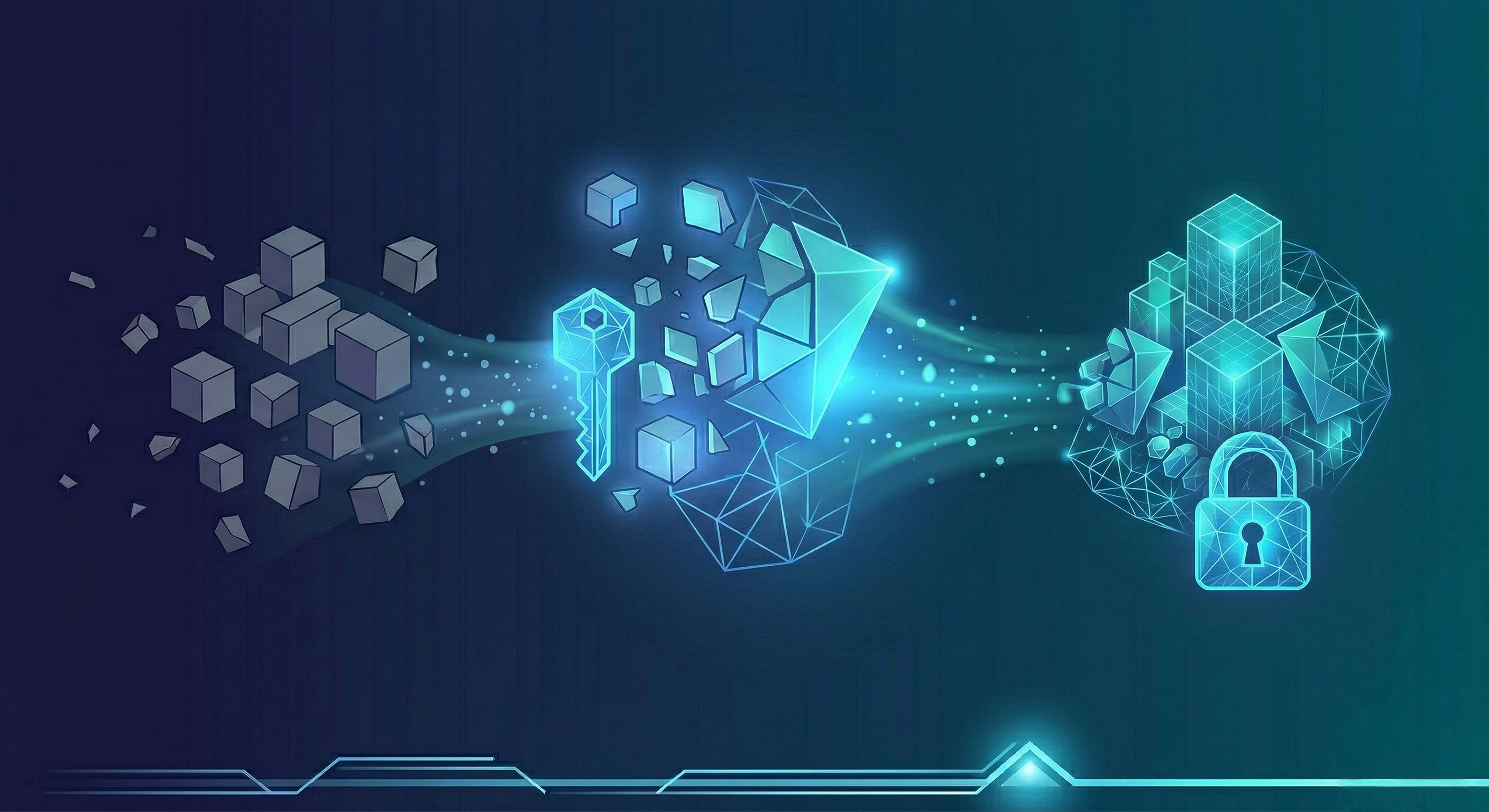
Before diving into the architectural changes required to survive this shift, we need to understand the immediate threat. We are no longer waiting for Q-Day to happen before taking action, because the attacks have already begun through a method called "Store Now, Decrypt Later." Hostile entities are actively harvesting and storing massive amounts of encrypted data today. They cannot read it yet, but they are hoarding it with the expectation that a quantum computer will easily unlock it in the near future. This makes upgrading to PQC a present-day emergency for any backend developer handling sensitive information.
The Shift from Primes to Lattices
To understand the solution, we must look at how the underlying mathematics are changing. Traditional encryption relies on the extreme difficulty of factoring massive prime numbers. A classical computer would take millions of years to solve this puzzle, but a quantum computer running Shor's Algorithm can solve it in hours.
Post-Quantum Cryptography abandons prime numbers entirely. The new standard approved by the National Institute of Standards and Technology (NIST) relies heavily on something called Lattice-Based Cryptography. Instead of factoring numbers, lattice cryptography hides data within complex, multi-dimensional geometric grids. Imagine trying to find a specific intersection in a chaotic city map that exists in five hundred dimensions. Even with the advanced parallel processing capabilities of a quantum computer, calculating the correct path through these multi-dimensional grids requires an impossible amount of computational power. This is the new mathematical fortress securing our data.
The QuSecure Approach and Crypto-Agility
This mathematical shift brings a massive headache for systems engineers: how do you upgrade a massive, legacy infrastructure to use these new algorithms without breaking everything? This is exactly why QuSecure has been dominating the news cycle.
QuSecure is pioneering a concept known as "Crypto-Agility." Instead of forcing developers to manually rewrite their application code to support new cryptographic libraries, platforms like QuSecure's QuProtect operate at the network layer. They create a software-defined cryptographic tunnel. This means a developer can route their standard TLS traffic through a quantum-safe layer without having to completely re-architect their existing backend services or database connections. It provides immediate quantum resilience while buying engineering teams the time they need to upgrade their core applications organically.
The Architectural Reality for Developers
For developers focusing on clean, modern architectures, the transition to PQC introduces new physical constraints that must be accounted for in system design. Lattice-based encryption keys and digital signatures are significantly larger than traditional RSA keys.
When a client and server perform a TLS handshake using post-quantum algorithms, they are exchanging much heavier data payloads. If you are building high-performance microservices, this increase in packet size can lead to network fragmentation and increased latency during the initial connection phase. Modern backend development now requires tuning load balancers and reverse proxies to handle these larger cryptographic payloads efficiently. Furthermore, relying on modern programming languages like Rust and Go becomes critical, as their updated standard libraries are already optimized to handle the memory demands of these heavier mathematical operations without slowing down the entire system.
The Payload Challenge (MTU and Latency)
From an implementation standpoint, PQC is a "heavy" upgrade.
Classic ECC Key: ~32 bytes.
Post-Quantum (Kyber/ML-KEM) Key: ~800 to 1,200 bytes. For a backend developer, this means the initial TLS handshake is no longer a tiny exchange. It can lead to packet fragmentation if your MTU (Maximum Transmission Unit) settings aren't optimized. This is where "Crypto-Agility" tools like QuSecure become vital—they manage these heavy handshakes at the edge so your internal microservices don't choke on the increased overhead.
Why This is Fact, Not Hype:
Apple’s PQ3: In early 2024, Apple deployed PQ3 for iMessage. They didn't do it for marketing; they did it because their threat models showed that state-level actors were already hoarding encrypted messages.
Google Chrome: Chrome has already begun integrating X25519+Kyber768 hybrid key exchange for its users.
Signal: The gold standard of private messaging, Signal, upgraded to the PQXDH protocol to protect users from future quantum decryption.
Summary for your readers: We aren't moving to Post-Quantum Cryptography because quantum computers are here today. We are moving because the data we protect today must survive the technology of tomorrow.
Frequently Asked Questions
What exactly is Q-Day? Q-Day is the hypothetical date when a sufficiently stable and powerful quantum computer successfully breaks the public-key cryptography (like RSA-2048) that currently secures internet communications, banking, and military data.
If quantum computers aren't breaking encryption today, why upgrade now? The biggest risk is the "Store Now, Decrypt Later" strategy. Hackers are stealing encrypted databases and network traffic today. If your data has a long shelf life—such as financial records, health information, or national security secrets—it will be decrypted and exposed the moment a capable quantum computer comes online.
Will Post-Quantum Cryptography make my applications slower? There is a slight performance trade-off. While the actual mathematical computations in lattice-based cryptography are surprisingly fast, the size of the keys and signatures is much larger. This means the initial handshake between a server and a client takes slightly longer and consumes more network bandwidth, though the steady-state connection remains fast.
Do I need to throw away my current encryption methods? No. The current industry best practice is a "hybrid approach." Systems are currently wrapping traditional encryption (like ECC) inside a layer of post-quantum encryption. This ensures that even if a flaw is found in the new, relatively untested PQC algorithms, the classic encryption is still there as a safety net.
The Final Word
The transition to Post-Quantum Cryptography is the most significant infrastructural upgrade in the history of the internet. Companies like QuSecure are making headlines because they offer a practical, agile bridge across this dangerous gap. For developers and system architects, this is a wake-up call. Building clean, high-performance applications in 2026 requires understanding that encryption is no longer a static feature you set and forget; it is a dynamic, evolving layer of your architecture that must be prepared for the quantum era.
1
0
19
For decades, the foundation of the Linux operating system and its surrounding backend infrastructure was built almost exclusively on C and C++. They provided the raw speed and low-level control required to make servers run and desktops function. However, as we move through 2026, a massive architectural shift is happening beneath our screens. The philosophy of backend development has changed, and two languages—Rust and Go—are leading a performance-first revolution that is reshaping the future of Linux.
This is not just a passing trend. For developers who prioritize clean, up-to-date methods and highly optimized systems, this transition represents the most significant evolution in open-source software in the last twenty years.
The Memory Safety Mandate and the Rust Invasion
The biggest vulnerability in traditional backend programming has always been memory management. A single misplaced pointer in C can crash a system or open a massive security loophole. Rust was designed to eliminate this entirely. By enforcing strict memory safety without sacrificing raw execution speed, Rust has done the impossible: it has earned a permanent place inside the Linux Kernel.
With the recent rollout of the Linux 7.0 architecture, the integration of Rust is no longer an experiment. Critical drivers, networking stacks, and file system components are being actively rewritten in Rust. For those of us running bleeding-edge, custom environments on Arch with highly efficient compositors like Hyprland, this shift is immediately noticeable. The system feels tighter. Background processes consume fewer resources, and the overall stability of the OS increases because entire classes of memory bugs have been mathematically eliminated by the compiler before the code even runs.
Writing backend code today means prioritizing modern, secure methods. Rust enforces a discipline that naturally leads to cleaner architecture, making it the ultimate tool for system-level programming where performance and safety cannot be compromised.
Go: The Undisputed Language of the Cloud
While Rust is conquering the kernel and system drivers, Go (or Golang) has completely taken over the cloud and infrastructure layers of Linux. If you look at the tools that power the modern internet—Docker, Kubernetes, Prometheus—they are almost universally written in Go.
Go was built by Google with a very specific philosophy: simplicity, massive concurrency, and incredibly fast compilation. When building a modern web architecture or microservices, developers need a language that gets out of the way. Go achieves this by providing a clean syntax and a powerful standard library. It forces you to write straightforward, readable code. In modern projects where clarity is paramount—where variables are logically named and comment lines are strictly written in English to maintain a universal standard—Go feels incredibly natural.
It compiles down to a single, statically linked binary. You drop that binary onto a Linux server, and it simply runs. No complex dependency chains, no bloated runtime environments. Just pure, unadulterated performance.
The Future of the Linux Ecosystem
So, what does this mean for the future of Linux and the developers who build on it? We are moving toward a highly specialized, dual-layered ecosystem.
The core of the operating system—the kernel, the hardware drivers, and the low-level security modules—will increasingly belong to Rust. This guarantees a foundational layer that is bulletproof and lightning-fast. Sitting directly on top of that, the user-space infrastructure, the web servers, and the container orchestration systems will be dominated by Go.
This combination is creating a new golden age for Linux. The days of accepting bloated software and constant memory leaks are over. The modern developer demands transparency, high-contrast logic, and absolute efficiency. As the industry standardizes around these two languages, Linux is transforming from a robust server OS into an unbreakable, high-performance engine for the next generation of computing.
Frequently Asked Questions
Why is Rust replacing C in parts of the Linux Kernel? C is incredibly powerful but requires the developer to manage memory manually, which often leads to security vulnerabilities. Rust offers the same low-level control and speed as C, but its compiler automatically prevents memory leaks and data races, making the operating system fundamentally more secure.
Is Go better than Rust for backend web development? It is not about one being better than the other; it is about the right tool for the job. Go is generally preferred for web servers, microservices, and cloud APIs because it is simpler to write, compiles incredibly fast, and handles concurrent network requests effortlessly. Rust is preferred when you need absolute, bare-metal performance and fine-grained control over system memory.
Do I need to learn Rust to use Linux in 2026? As a regular user, no. The benefits of Rust happen entirely behind the scenes, providing you with a faster and more stable system. However, if you are a backend software developer, understanding the concepts of memory safety in Rust and the concurrency models in Go is becoming essential for writing modern, high-quality code.
How does this affect custom desktop setups and window managers? Many modern tools, taskbars, and system monitors built for Wayland and advanced compositors are now being written in Rust. Because Rust is so efficient, these background applications draw almost zero idle CPU power, leaving all your hardware resources available for your actual work and development tasks.
The Final Word
The era of having to choose between raw execution speed and system safety is officially over. Rust and Go have proven that we can achieve both, provided we are willing to adapt to modern engineering paradigms. For backend developers and Linux enthusiasts, this transition is about much more than just learning a new syntax; it is about embracing a philosophy of clean, deterministic, and highly optimized software design. As the Linux kernel hardens its core with Rust and the cloud scales effortlessly with Go, the tools at our disposal have never been sharper. The future of the operating system is being written right now—it is incredibly fast, structurally sound, and unapologetically modern.

2
0
26
The tech industry is currently undergoing a massive structural shift, and Oracle’s recent workforce reductions are at the center of the conversation. At first glance, it looks like a traditional corporate downsizing. However, looking under the hood reveals a completely different story: an aggressive, high-stakes pivot from scaling human headcount to building massive, high-density AI infrastructure.
But as companies rush to replace traditional systems with artificial intelligence, a crucial reality check is emerging within the software development community. We are discovering exactly where AI excels, and more importantly, where human expertise remains absolutely irreplaceable.
The Shift from Headcount to Hardware
In the past, expanding a cloud enterprise meant hiring thousands of sales representatives, support staff, and mid-level administrators. Today, the currency of cloud computing has changed. Oracle is freeing up capital to build Generation 3 Cloud Infrastructure (OCI). These are not standard server rooms; they are highly specialized, liquid-cooled data centers designed to house thousands of intensive AI processors and Neural Processing Units.
The goal is to create an environment built specifically for the heavy lifting of machine learning. Oracle is betting its future on the idea that the "Autonomous Database"—a system that tunes, patches, and scales itself without a human administrator—is the only way to handle the petabytes of data generated by modern applications.
The "AI Writes Code" Myth and the 1.7x Bug Reality
With all this investment in autonomous systems, there is a popular narrative that AI is about to take over software engineering entirely. The reality on the ground is starkly different.
Recent industry data reveals a sobering metric: codebases heavily reliant on AI generation are currently producing up to 1.7 times more bugs than those written entirely by human developers. While an AI agent can instantly generate a block of logic or a basic API endpoint, it fundamentally lacks architectural foresight. It does not understand the long-term maintenance burden, the subtle nuances of domain-specific business logic, or the philosophy of clean, sustainable code.
Companies that maintain core, mission-critical technologies—like Oracle with its database kernel, or the engineers maintaining the vast Java ecosystem—know that they cannot hand the steering wheel over to a language model. AI is an incredibly powerful autocomplete and refactoring tool, but it is not a software architect. When an AI generates complex logic, it requires a human developer to meticulously review, debug, and securely integrate that code into a modern framework. The demand for developers who understand deep technical details and system architecture is actually increasing, not disappearing.
The True Role of the Autonomous AI Database
If AI isn't writing the core software, what is all this new infrastructure actually doing? The answer lies in operations and data management.
Oracle’s Autonomous Database uses AI not to write applications, but to observe them. By monitoring query patterns in real-time, the AI can preemptively allocate CPU and memory resources before a traffic spike hits. It can automatically restructure indexes to make data retrieval faster, and it can detect anomalous behavior that might indicate a security breach.
This is the perfect use case for artificial intelligence. It handles the tedious, high-volume operational tasks that humans struggle to monitor 24/7, leaving the creative problem-solving and clean architectural design to human engineers.
The Future is Sovereign and High-Density
As we look toward the future of cloud infrastructure, the focus is shifting to sovereignty and efficiency. Governments and large organizations are increasingly demanding that their data remain within their own physical borders. Oracle’s response is to deploy "Alloy" regions—compact, highly efficient, AI-native cloud environments that operate entirely under local jurisdiction.
Building these systems requires a delicate balance. It takes massive computing power to run the AI, but it takes sharp, detail-oriented human minds to build the applications that actually utilize that power securely and efficiently.
Frequently Asked Questions (FAQ)
Is artificial intelligence going to replace software developers? No. While AI is changing how we write code, it acts as a highly capable assistant rather than a replacement. Because AI-generated code often introduces subtle bugs and architectural flaws, human developers are more essential than ever to ensure code remains clean, secure, and logically sound.
What does an Autonomous Database actually do? An autonomous database uses machine learning to handle routine maintenance. It automatically applies security patches, backs up data, and scales server resources up or down based on current traffic. This eliminates manual server management, allowing engineering teams to focus purely on building the application.
Why is Oracle investing so heavily in new data centers? Modern AI workloads require significantly more power and specialized cooling than traditional web servers. Oracle is building high-density data centers specifically designed to house the advanced GPUs and NPUs necessary to train and run massive artificial intelligence models efficiently.
Are core languages like Java being rewritten by AI? Absolutely not. The foundations of enterprise software require absolute precision and stability. While AI tools might help developers write Java faster, the core language development and major architectural decisions are strictly guided by human experts who understand the intricate details of system performance.
Does Oracle's pivot mean they are moving away from traditional Java and SQL? Not at all. Java and SQL remain the bedrock of enterprise software. However, Oracle is adding "AI Vector" support directly into these languages. You will still write SQL, but you will use it to query unstructured AI data (like images and videos) as easily as you query a standard table.
Is the Autonomous Database actually replacing DBAs? It is changing the role of the DBA. Instead of manual patching and tuning, modern DBAs are becoming Data Architects. They focus on data security, governance, and how to structure data for AI models, while the "Autonomous" systems handle the repetitive maintenance.
How does Oracle's AI cloud compare to AWS or Azure in 2026? While AWS and Azure have larger general-purpose clouds, Oracle is specializing in "High-Performance AI." Because their OCI Gen 3 architecture was built later, it utilizes newer non-blocking network fabrics that allow GPUs to communicate faster, making it a preferred choice for training massive Large Language Models (LLMs).
Will this AI focus make cloud services more expensive? In the short term, hardware costs are high. However, the goal of "Autonomous" systems is to reduce human labor costs. Over time, the "cost per query" is expected to drop as AI-driven optimizations make the infrastructure significantly more efficient than human-managed systems.
The Final Word
The transition to AI-driven infrastructure is not about replacing human intellect; it is about amplifying it. Oracle’s massive pivot toward autonomous systems and high-density computing reflects a future where machines handle the heavy, repetitive lifting of server management.
Oracle’s transition is a blueprint for the 2026 tech landscape. The shift from human-heavy organizations to infrastructure-heavy, AI-driven powerhouses is inevitable. For developers, this means the tools we use are becoming smarter, more autonomous, and more integrated into the hardware than ever before. We are moving toward a world where the database doesn't just store your data—it understands it.
However, as the 1.7x bug rate in AI coding proves, the heart of technology remains human. Building clean, modern, and reliable software is still a craft that requires the meticulous detail and architectural vision that only a dedicated developer can provide.

1
0
27
The release of Linux Kernel 7.0 is getting very close. On March 29, 2026, Linus Torvalds announced the sixth Release Candidate (rc6). While version 7.0 sounds like a massive change, this specific update is focused entirely on stability, bug fixes, and preparing the system for its final release in April.
If you are a Linux user, a developer, or a system administrator, here is a clear and simple breakdown of what is happening in Linux 7.0-rc6 and why this update matters for your daily computer use.
1. What is New in rc6? (Bug Fixes and Hardware Support)
A "Release Candidate" means the developers are no longer adding new features. Instead, they are finding and fixing errors. The rc6 update is slightly larger than usual because developers are catching many small bugs.
The main improvements in this update include:
File System Fixes: A large amount of work was done on EXT4 (one of the most popular Linux file systems) and the Virtual File System (VFS). This ensures your data is saved correctly and accessed faster without errors.
Audio and Laptop Support: If you use a modern laptop with an Intel or AMD processor, you might have experienced issues with internal microphones or speakers. This update includes many specific fixes for these hardware audio problems.
Virtualization Security: For servers and developers running virtual machines, security protocols like Intel TDX and AMD SEV-SNP received important updates to keep virtual environments isolated and safe.
2. Why the Linux 7.0 Update is Important
Even though rc6 is just about fixing bugs, the complete Linux 7.0 update brings two major improvements that will affect the future of the operating system:
Better AI Hardware Support: Modern computers come with NPUs (Neural Processing Units) designed specifically for Artificial Intelligence tasks. Linux 7.0 improves the internal systems to support these chips natively. This means you will be able to run local AI models faster and with less battery drain.
Improved Security with Rust: The C programming language has been the core of Linux for decades, but it can have memory security flaws. Linux 7.0 includes more core components and drivers written in Rust, a modern programming language that prevents these memory errors automatically. This makes the entire operating system much more secure against hacking.
3. When Will the Final Version Be Released?
The development is almost finished. Here is the expected timeline for the next few weeks:
April 5, 2026: Release of 7.0-rc7 (the final planned testing version).
April 12, 2026: The official release of the stable Linux Kernel 7.0.
(Note: If developers find more bugs next week, there might be an rc8, which would push the final release to April 19).
Frequently Asked Questions (FAQ)
Q: What exactly is a "Release Candidate" (RC)? A: A release candidate is a testing version of software that is almost ready for the public. It has all the new features, and developers release it to a small group of testers to find any remaining bugs before the official launch.
Q: Should I install Linux 7.0-rc6 on my main computer? A: No. Unless you are a kernel developer testing specific hardware, you should not install an RC version on your daily computer. It can still contain bugs that might cause system crashes. It is best to wait for the final stable release in mid-April.
Q: Will Linux 7.0 make my computer run faster? A: It depends on your hardware. If you are using modern AMD Ryzen or Intel processors, the new scheduling updates in 7.0 can make your system feel smoother and manage multiple tasks better. However, older computers might only notice small performance differences.
Q: When will my Linux distribution get the 7.0 update? A: If you use a "rolling release" distribution like Arch Linux, you will likely receive the stable 7.0 update within a few days of its official launch in April. If you use a stable distribution like Ubuntu, it will be included in the upcoming 26.04 LTS release.
The Final Word
The Linux 7.0-rc6 update shows that the development team is doing the hard work to ensure the next major kernel release is as stable as possible. While the jump to version 7.0 brings exciting new support for AI hardware and Rust programming, the true value of this update is its reliability. Whether you are running a high-end gaming setup, a portable work laptop, or a web server, April is going to be a great month for the open-source community.

1
0
115
For the past few years, we have been living in the era of the chatbot. We typed questions into a box, and a smart AI typed answers back. It was impressive, but it had a massive limitation: it could only talk. If you wanted to actually get something done, you still had to do the heavy lifting yourself.
In 2026, that era is officially ending. Welcome to the age of Agentic AI.
Instead of just answering your questions, Agentic AI acts on your behalf. It is the difference between a smart encyclopedia and a highly capable personal assistant. Here is a simple, detailed breakdown of what Agentic AI is, how it works, and why it is the biggest technological leap of the decade.
1. Chatbots vs. AI Agents: What is the Difference?
To understand Agentic AI, it helps to look at a real-world scenario. Let’s say you are planning a weekend trip.
The Chatbot Experience: You ask, "Plan a 3-day itinerary for a trip to Rome." The AI gives you a beautiful text list of places to visit and hotels to stay at. But then, you have to open new tabs, find the flights, book the hotel, buy the museum tickets, and add everything to your calendar.
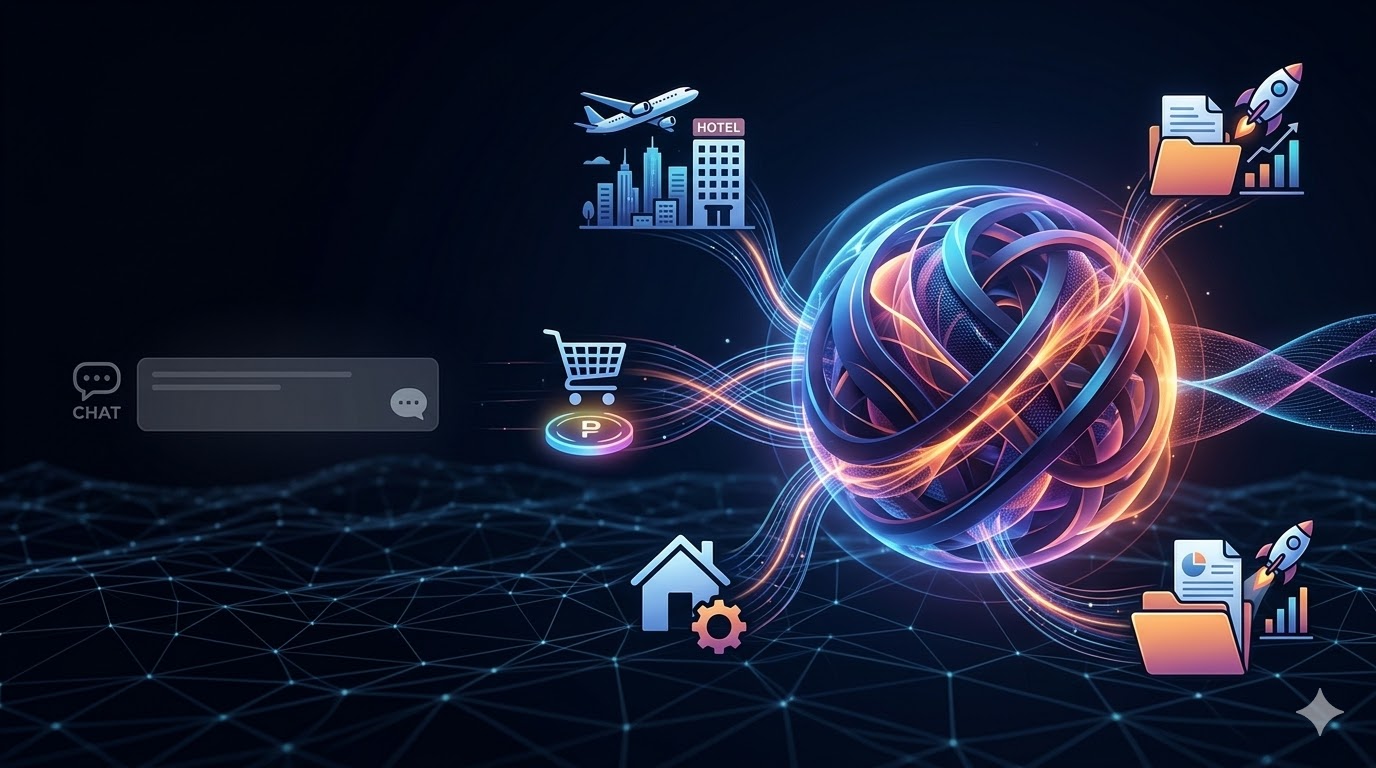
The Agentic AI Experience: You say, "Book me a weekend trip to Rome under $800, leaving Friday night." The AI Agent understands the goal. It actively browses flight websites, finds the best price, checks hotel availability, uses your saved payment method (with your permission), completes the bookings, and automatically syncs the flight times to your calendar.
A chatbot gives you a recipe; an AI Agent buys the ingredients and preheats the oven.
2. How Does It Work? The "Brain and Hands" Concept
How does a computer program suddenly know how to buy plane tickets or send emails? It comes down to giving the AI two new abilities: Reasoning and Tool Use.
Reasoning (Thinking in Steps): When you give an AI Agent a goal, it doesn't just panic and guess. It creates a step-by-step plan. It says, "First, I need to check flight prices. Second, I need to check hotels. Third, I need to compare the total to the $800 budget."
Tool Use (Digital Hands): AI models are now trained to use the software we use every day. An agent can connect to web browsers, calculators, Excel spreadsheets, email accounts, and thousands of other digital tools.
Self-Correction: This is the real magic. If an AI Agent tries to book a hotel and the website is down, it doesn't just crash and give up. It realizes there is an error, changes its plan, and searches for a different hotel website. It learns from its environment in real-time.
3. Real-World Superpowers: What Can It Do For You?
Agentic AI is moving out of research labs and into our daily lives. Here is how it is changing different areas:
Personal Life: Imagine telling your phone, "Cancel my gym membership." The agent navigates the complicated gym website, interacts with the customer service portal, fills out the cancellation form, and emails you the confirmation receipt.
Work and Productivity: Instead of reading 50 pages of financial reports, you can tell your work Agent, "Read these PDF reports, find the three biggest expenses, put them into a bar chart, and email the presentation to my team." A task that takes a human four hours takes the agent four minutes.
Software and Gaming: In gaming, non-playable characters (NPCs) are no longer repeating the same three lines of dialogue. Powered by Agentic AI, they have their own goals, routines, and memories, creating worlds that feel truly alive.
4. The Big Question: Is It Safe?
Giving AI the ability to click buttons, send emails, and spend money naturally sounds a bit scary. What if it makes a mistake? What if it buys the wrong thing?
The tech industry has solved this with a concept called "Human-in-the-Loop." Right now, AI Agents are not allowed to run completely wild. They act as perfect preparers. If an agent is tasked with paying a bill or sending an important email to your boss, it will do 99% of the work. It will draft the email, attach the files, and write the address. But before it hits "Send" or "Buy," a pop-up appears on your screen asking for your final approval. You are always the final decision-maker.
Frequently Asked Questions (FAQ)
Q: Will Agentic AI take my job? A: This is the most common concern, but scientific studies and industry trends in 2026 point toward "augmentation," not replacement. Agentic AI is designed to take over the boring, repetitive parts of your job—like data entry, scheduling, and sorting emails. This frees you up to focus on the creative, strategic, and human-relationship parts of your work that a machine simply cannot do. It is a powerful assistant, not a replacement.
Q: Do I need to know how to code to use AI Agents? A: Not at all. The beauty of Agentic AI is that it understands natural human language. You do not need to write complex commands or scripts. You simply talk to it or type out your request exactly as you would ask a human assistant (e.g., "Find the cheapest direct flight to London next Friday and hold the ticket for me").
Q: Can an AI Agent secretly access my bank account or spend my money? A: Security is the absolute highest priority for these systems. AI Agents operate within strict boundaries. While they can browse shopping sites or prepare a payment portal, they are blocked from executing financial transactions without a "Human-in-the-Loop." This means the agent will always pause and ask for your biometric approval (like a fingerprint or face scan) before a single dollar is spent.
Q: How is this different from older smart assistants like Siri or Alexa? A: Older voice assistants were essentially voice-activated search engines or remote controls. If you asked them to do something they weren't specifically programmed for, they would just say, "I'm sorry, I don't understand." Agentic AI has reasoning skills. If it faces a new problem, it figures out a multi-step plan to solve it on its own, adapting to errors along the way.
Q: Do I need to buy a supercomputer to run these agents? A: No. While massive agents run on cloud servers, 2026 is seeing a huge push toward "Local AI." Modern laptops and smartphones are now built with Neural Processing Units (NPUs)—special chips designed specifically to run smaller, highly efficient AI agents directly on your device. This means your personal agent can run fast, for free, and without sending your private data to the internet.
The Bottom Line
We are moving from computers that wait for our instructions to computers that actively solve our problems. Agentic AI is turning software from a tool we use into a partner we collaborate with. As these systems get faster, more secure, and integrated into our phones and computers, the way we work and live will never be the same.
2
0
52
Valve is ready to change living room gaming once again. After the massive success of the Steam Deck, the company is preparing to launch three new hardware products in 2026: a new Steam Machine, the Steam Controller 2, and a VR headset named Steam Frame.
This time, the technology is ready. With SteamOS and Proton, playing PC games on a television is smoother and easier than ever. Here is everything you need to know about Valve's upcoming hardware ecosystem.
1. The New Steam Machine: A Compact Gaming PC
The original Steam Machine launched years ago, but the new 2026 version is a completely different device. It is designed to bring the full power of a PC into a small, console-like box.
Design: Leaks suggest it will look like a small, matte black cube. It is minimalist and designed to fit perfectly next to a TV.
Operating System: It runs on SteamOS, the same Linux-based system used on the Steam Deck. This means it is lightweight, fast, and optimized purely for gaming.
Cooling and Performance: The device uses a vertical cooling system. This keeps the machine very quiet, even when playing heavy, high-graphic games at 4K resolution.
2. Steam Controller 2: Better Precision
Many gamers loved the first Steam Controller because it allowed them to play mouse-and-keyboard games from a sofa. The Steam Controller 2 improves on this idea with modern technology.
No More Stick Drift: The new thumbsticks use special magnetic sensors. This completely prevents "stick drift," a common problem where controllers register movement even when you are not touching them.
Upgraded Trackpads: It still features dual trackpads, but they now have advanced haptic feedback. This makes the trackpads feel much more like using a real physical scroll wheel or mouse.
Low Latency: It connects to the Steam Machine with a dedicated wireless signal, ensuring there is no input delay while playing fast-paced games.
3. Steam Frame: The Next Generation of VR
Virtual Reality is also getting a major upgrade. Valve is introducing the Steam Frame, a new headset designed for comfort and ease of use.
Wireless Freedom: Unlike older VR headsets that require heavy cables, the Steam Frame is completely wireless.
Clearer Vision: It uses new lens technology to make the screens much clearer, reducing the blurry edges often seen in older VR models.
Easy Setup: You do not need to install tracking cameras in your room. The headset has built-in cameras that track your movement automatically. You can play games directly on the headset or stream larger games wirelessly from your Steam Machine.
Frequently Asked Questions (FAQ)
Q: Can I install a different operating system on the new Steam Machine?
A: Yes. Valve keeps its hardware open. While SteamOS is the default and provides the best gaming performance, you can choose to install other Linux distributions or even Windows.
Q: Do I have to buy the Steam Controller 2 to use the Steam Machine?
A: No. You can use almost any modern controller, including Xbox or PlayStation controllers. However, the Steam Controller 2 is best for PC games that normally require a mouse.
Q: When will these devices be released?
A: Valve is targeting the first half of 2026. However, global hardware supply issues might cause slight delays.

1
0
63
Ubuntu 26.04 LTS, codenamed "Resolute Raccoon," marks a pivotal shift in the Linux ecosystem. It is no longer just a "stable workstation" OS; it is transforming into a modernized, AI-ready, and potentially immutable powerhouse. For power users and sysadmins alike, the 2026 roadmap suggests a version of Ubuntu that finally bridges the gap between traditional Debian stability and the cutting-edge requirements of modern hardware.
For years, Ubuntu has been the "comfort zone" of the Linux world. It’s the distro you install when you just want things to work. However, as we look toward the development cycle of Ubuntu 26.04 LTS, the narrative is shifting. Canonical isn't just maintaining a legacy; they are re-engineering the foundations of the desktop and server experience.
Whether you are a developer, a privacy advocate, or a Linux enthusiast looking for the next big leap, the "Resolute Raccoon" era is shaping up to be the most ambitious LTS release in a decade.
1. The Core Architecture: Linux Kernel 7.0 and Rust Integration
By the time Ubuntu 26.04 hits full maturity, the Linux Kernel 7.0 architecture will likely be the standard. This isn't just a version number jump.
Schedulers & Performance: We expect major improvements in the EEVDF (Earliest Eligible Virtual Deadline First) scheduler, which significantly optimizes task handling for modern multi-core CPUs like the Ryzen 9 and Intel Ultra series.
The Rust Revolution: We are seeing more drivers and core kernel modules being rewritten in Rust. For the end-user, this means a drastic reduction in memory-related crashes and a much more secure "base" for the operating system.
Hardware Parity: With the rise of ARM64 on laptops, 26.04 is expected to offer first-class support for Snapdragon and Apple Silicon-like architectures, making Ubuntu a viable choice for high-end, battery-efficient mobile workstations.
2. GNOME 50: The Next Generation of Desktop Flow
Image sourced from here.
Ubuntu 26.04 is expected to ship with GNOME 50. This milestone is predicted to refine the "Activity" workflow into something far more fluid.
Dynamic Tiling: While we love our window managers like Hyprland, GNOME 50 is expected to bring native, advanced tiling features that mimic some of that "tiler" efficiency without the steep learning curve.
Refined Yaru Aesthetics: The Yaru theme is evolving. Expect a move toward "Organic Glass" aesthetics—subtle transparencies, more rounded corners (but not too sharp), and a high-contrast mode that actually looks modern rather than just "accessible."
Wayland Everywhere: By this cycle, X11 will likely be a legacy ghost. The focus is 100% on Wayland, which means smoother animations, better multi-monitor scaling, and tear-free gaming via the latest PipeWire and Mesa stacks.
3. The "Immutable" Shift: Ubuntu Core Desktop
This is perhaps the biggest talking point for the 2026 cycle. Canonical is pushing toward Ubuntu Core Desktop—an immutable version of Ubuntu.
Transactional Updates: Imagine a system where an update can never "break" your boot. If an update fails, the system simply rolls back to the previous known-good state.
Security by Design: With a read-only root filesystem, malware has nowhere to hide. For developers, this means using Distrobox or LXD containers for development, keeping the host system pristine and stable.
Snap-First, but Refined: The "Snap" debate continues, but by 26.04, the startup times and integration issues are predicted to be a thing of the past. The goal is a unified sandbox where your browser, IDE, and tools are isolated for maximum security.
4. AI at the OS Level: NPU Integration
2026 is the year of the "AI PC," and Ubuntu 26.04 is positioning itself as the open-source answer to Windows Copilot.
Native NPU Support: Ubuntu will likely include a unified driver stack for NPUs (Neural Processing Units). This allows for local AI processing—meaning you can run LLMs (Large Language Models) or image generation locally on your hardware without sending data to a cloud.
AI-Assisted Troubleshooting: Expect a new system tool that uses local machine learning to analyze logs and suggest fixes. Instead of scouring StackOverflow for hours, the OS could potentially tell you exactly which config file is causing your "Resolute Raccoon" to stutter.
5. Gaming and Pro-Graphics
The "Steam Deck effect" has permanently changed Linux gaming. For 26.04, the focus is on "Zero Configuration" gaming.
NVK Maturity: The open-source NVIDIA drivers (NVK) are expected to reach performance parity with the proprietary drivers by this cycle. This means a seamless "out of the box" experience for NVIDIA users, which has historically been the biggest pain point for Linux newcomers.
HDR Support: HDR on Linux is finally becoming a reality. The 26.04 stack is predicted to offer full, stable HDR support for media and gaming, matching the visual fidelity of macOS and Windows.
Frequently Asked Questions (FAQ)
Q: When is the official final release date for Ubuntu 26.04 LTS?
A: The final, stable version of "Resolute Raccoon" is scheduled to launch on April 23, 2026. Following the Ubuntu tradition, LTS versions are released on the fourth Thursday of April every two years.
Q: Will Ubuntu 26.04 drop support for X11 entirely?
A: While X11 packages will likely remain in the universe repositories for legacy reasons, the default experience and official support will be almost exclusively Wayland. Most modern "Linuxers" have already made the switch, and 26.04 will likely solidify this.
Q: Should I wait for 26.04 or stay on 24.04?
A: 24.04 is an incredible "stability" release. However, if you are using the latest hardware (Intel 15th gen or Ryzen 9000 series), the kernel and Mesa improvements in the 26.04 cycle will be worth the upgrade for the performance gains alone.
Q: Is "Immutable Ubuntu" mandatory?
A: No. Canonical plans to offer both the traditional "Classic" Ubuntu and the "Core Desktop" (Immutable) version. You can choose the flexibility of a standard Debian-based system or the rock-solid security of an immutable one.
Q: How long will 26.04 LTS be supported?
A: Following the current trend, 26.04 LTS is expected to have a minimum of 5 years of standard support, extendable to 10 or even 12 years with Ubuntu Pro, making it a "forever OS" for many enterprise users.

2
0
84
Albion Online is entering its most transformative era yet, bridging the gap between PC and console while introducing a significant graphical evolution. With the upcoming Xbox Series X|S launch and the Radiant Wilds update, Sandbox Interactive is doubling down on its "One World" vision, offering a more immersive and accessible sandbox experience for the 2026 season.
The 2026 roadmap for Albion Online has officially set a new standard for cross-platform MMORPGs. By moving beyond its PC and mobile roots, the game is preparing to welcome a massive new audience on console while simultaneously upgrading its foundational tech. From the long-awaited Xbox debut to a complete visual overhaul, here is the breakdown of the major developments currently shaping the world of Albion.
The Xbox Series X|S Launch: April 21, 2026
After years of speculation, the official Xbox release date has been confirmed for April 21, 2026. This is not a separate ecosystem; it is a full integration into the existing global servers, ensuring that the "One World" philosophy remains intact.
Console Optimization and UI Overhaul Sandbox Interactive hasn't just ported the game; they have rebuilt the user interface for a controller-first experience. Key screens—including the Marketplace, Destiny Board, and player inventory—have been redesigned with radial menus and contextual shortcuts. This ensures that competitive PvP and complex economic management are just as fluid on a gamepad as they are with a mouse and keyboard.
Cross-Progression and Accessibility The Xbox version features seamless account linking. Existing players can log in to their PC or mobile accounts on their console without losing a single silver coin or Fame point. Additionally, the Xbox version will support full mouse and keyboard functionality for those who prefer the classic setup while playing on a console.
The Radiant Wilds Update: April 13, 2026
Launching just ahead of the Xbox debut, the Radiant Wilds update brings a sweeping visual and technical refresh to the entire game world.
Visual Overhaul and Biome Identity Every biome in Albion is receiving a facelift. The update introduces a modern lighting system, high-resolution textures, and a brand-new water shader. These changes are designed to give each region—from the humid swamps of Thetford to the arid Steppes of Bridgewatch—a more distinct and immersive identity. Atmospheric effects like drifting pollen, sand gusts, and improved cloud shadows add a layer of environmental depth that has been missing since the 2017 launch.
The Armory and 1v1 Arena To bridge the gap between casual play and high-tier competitive content, two new features are being introduced:
The Armory: An in-game tool that analyzes player data to recommend builds for specific game modes. This is a game-changer for new players overwhelmed by the "You are what you wear" system.
1v1 Arena: A dedicated, non-lethal PvP mode. This allows players to practice combat mechanics and test new builds in a timed environment without the risk of losing their gear—a perfect training ground for the influx of new console players.
Summer Roadmap: The Arrival of Dragons
Looking further into 2026, the summer update is teased to include one of the most requested features in the game's history: Dragons.
Positioned as momentous world objectives, dragons will serve as both high-end PvE challenges and flashpoints for massive PvP battles. While the most rewarding dragon encounters will be located in full-loot Outlands zones, the developers have hinted at opportunities for non-lethal gameplay as well. Alongside this, a special "Keeper Event" season is planned, which will be the first time-limited global narrative event since the Avalonian Invasion.
Frequently Asked Questions (FAQ)
Q: Will Xbox players have their own separate servers?
A: No. Albion Online maintains its unified server structure. Xbox players will join the existing Americas, Asia, and Europe servers, playing alongside PC and mobile users in real-time.
Q: Does the Radiant Wilds visual update increase the PC system requirements?
A: Sandbox Interactive has focused heavily on optimization. Despite the significant graphical jump, the update is designed to run smoothly on modern systems without increasing the minimum required specs, even during large-scale ZvZ (Zerg vs. Zerg) battles.
Q: Can I use my existing character on Xbox?
A: Yes. Full cross-progression is supported. Once you link your Albion Online account to your Xbox profile, your character, gear, and progress will be synced across all platforms.
Q: Is there a subscription required to play on Xbox?
A: Albion Online remains free-to-play. While an optional "Premium" status exists to speed up progression and economy, the core game and all updates are accessible to everyone.
2
0
62
The gaming industry woke up to a seismic shift. Epic Games, the powerhouse behind Fortnite and the industry-standard Unreal Engine, officially announced it is laying off approximately 20% of its workforce—amounting to over 1,000 employees.
For a company that has long been seen as one of the most stable and aggressive players in the market, this massive downsizing raises a chilling question: If a giant like Epic is pulling back, what does the "new reality" of 2026 look like for the rest of the industry?
Tim Sweeney: "We Are Spending More Than We Earn"
In a memo sent to all employees earlier today, Epic Games CEO Tim Sweeney was blunt about the company’s financial situation. He admitted that Epic has been spending significantly more money than it has been bringing in for quite some time.
Sweeney explained that while Fortnite remains a massive revenue engine, its growth has stabilized. Meanwhile, billions of dollars have been poured into long-term bets like the Epic Games Store, the evolution of Unreal Engine, and the ambitious "Metaverse" vision. However, the return on those investments hasn't matched the speed of the spending. The aggressive expansion strategy that worked during the 2020-2023 boom is simply no longer sustainable in 2026.
The "Fortnite" Evolution: From Game to Platform
One of the most interesting parts of Sweeney’s explanation involves how Fortnite itself has changed. It is no longer just a Battle Royale game; it has transformed into a social platform similar to Roblox or Minecraft.
This transition changes the math for Epic. As players spend more time in user-generated maps and experiences, a larger portion of the revenue goes to the creators rather than staying with Epic. While this model keeps the ecosystem alive and growing, it results in lower profit margins for the company. Epic is essentially struggling to carry the financial weight of the massive digital world it built.
A Warning Sign for the 2026 Gaming Market
The layoffs at Epic Games are a clear signal that the "Efficiency Era" of 2026 is officially here. The era of hyper-growth fueled by the pandemic is a distant memory, and even the biggest studios are now being forced to prioritize financial stability over rapid expansion.
Industry analysts suggest that this move will likely trigger similar "corrections" across other major studios this year. 2026 is shaping up to be a year where "doing more with less" is the primary goal. For smaller developers and tech partners, Epic’s decision is a loud wake-up call to manage resources with extreme caution.
Frequently Asked Questions (FAQ)
Q: Will these layoffs affect "Fortnite" updates?
A: Epic has stated that the core development teams for Fortnite are largely unaffected by these cuts. However, the sheer scale of the layoffs suggests that long-term experimental modes or non-core projects may see slower development cycles.
Q: Is the Epic Games Store or Unreal Engine in danger?
A: No. Tim Sweeney emphasized that both the store and the engine remain the pillars of the company. These projects will continue to receive investment, but with a much tighter focus on ROI (Return on Investment).
Q: What is the severance package for the affected employees?
A: Epic announced a comprehensive support package, including six months of base pay, continued healthcare coverage, and career transition services to help the 1,000+ employees find new roles within the industry.
Q: Does this mean the "Metaverse" is dead? A: Not dead, but certainly being "right-sized." Epic is still committed to its long-term vision of a connected social ecosystem, but it is no longer willing to fund that vision at a loss.

2
0
76